A MENU-PAAN guide
How to read a Japanese menu
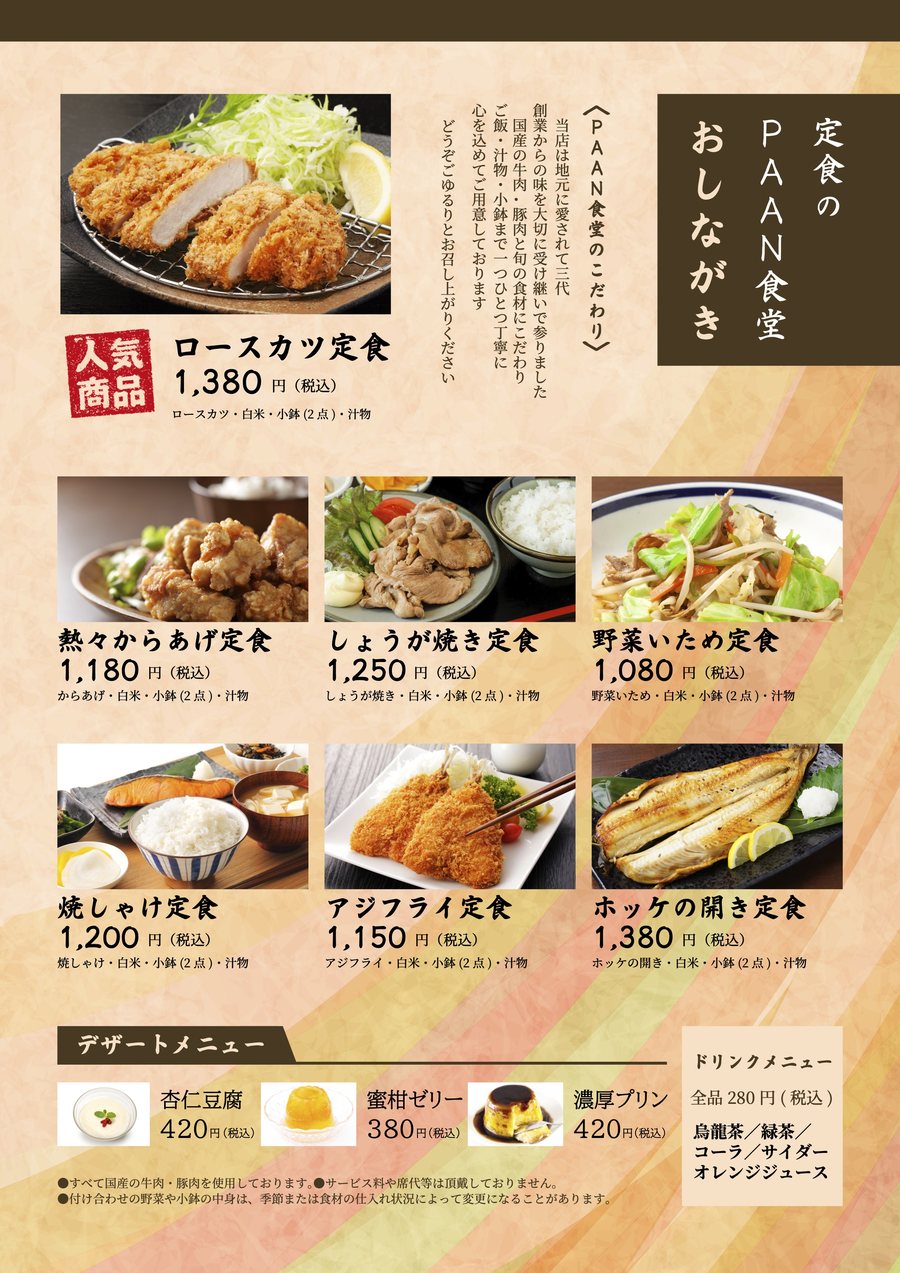
Japanese menus can look impenetrable: columns of characters running top to bottom, prices in kanji, and dishes written by hand on paper strips along the wall. Once you know how they are laid out and recognise a few dozen words, most of them become readable. This guide covers the layout, the usual sections, common words with their readings, how prices work, and how to order.


How Japanese menus are laid out
Vertical writing
Many traditional restaurants write their menus vertically (縦書き, tategaki). Read each column from top to bottom, and the columns from right to left. The price is usually at the bottom of the same column as the dish. Modern and chain restaurants mostly use horizontal writing, read left to right like English.
Handwritten menus
Izakaya, sushi counters and small local restaurants often write dishes by hand on a blackboard or on paper strips (短冊, tanzaku) hung on the wall. These usually list the day's specials and seasonal dishes, so they change often and are rarely translated. Brush-written characters can be hard to read even for Japanese people who are not used to them.
Numbers in kanji
Prices are sometimes written in kanji rather than digits, especially on vertical menus: 一 (1), 二 (2), 三 (3), 四 (4), 五 (5), 六 (6), 七 (7), 八 (8), 九 (9), 十 (10), 百 (100), 千 (1,000), 円 (yen). For example, 千二百円 is ¥1,200 and 八百円 is ¥800.

The usual sections
| Japanese | Reading | Meaning |
|---|---|---|
| 飲み物 | nomimono | Drinks |
| 前菜 | zensai | Starters |
| 一品料理 | ippin ryōri | À la carte dishes, often small plates to share |
| 刺身・お造り | sashimi, otsukuri | Sliced raw fish |
| 焼き物 | yakimono | Grilled dishes |
| 揚げ物 | agemono | Deep-fried dishes |
| 煮物 | nimono | Simmered dishes |
| ご飯物 | gohanmono | Rice dishes, usually eaten towards the end of the meal |
| 麺類 | menrui | Noodles |
| 定食 | teishoku | Set meal: a main dish with rice, miso soup and pickles |
| 甘味・デザート | kanmi, dezāto | Desserts |
Common words with readings and meanings
Dishes
| Japanese | Reading | Meaning |
|---|---|---|
| 刺身 | sashimi | Slices of raw fish or seafood, served with soy sauce and wasabi |
| 焼き鳥 | yakitori | Chicken skewers grilled over charcoal. Ordered with 塩 (shio, salt) or タレ (tare, a sweet soy glaze) |
| 天ぷら | tempura | Seafood and vegetables fried in a light batter |
| 串カツ | kushikatsu | Meat, seafood and vegetables on skewers, coated in breadcrumbs and deep-fried |
| 唐揚げ | karaage | Japanese fried chicken, marinated and coated in starch or flour |
| 茶碗蒸し | chawanmushi | Savoury steamed egg custard with dashi, served in a cup |
| 枝豆 | edamame | Boiled young soybeans in the pod, lightly salted |
| 冷奴 | hiyayakko | Chilled tofu with toppings such as ginger and spring onion |
| 味噌汁 | misoshiru | Miso soup |
| お茶漬け | ochazuke | Rice with green tea or dashi poured over it |
Drinks
| Japanese | Reading | Meaning |
|---|---|---|
| 生ビール | nama bīru | Draught beer |
| 日本酒 | nihonshu | Sake, served cold (冷, hiya) or warm (燗, kan) |
| 焼酎 | shōchū | A distilled spirit, often drunk with water, hot water or soda |
| ソフトドリンク | sofuto dorinku | Soft drinks |
| 飲み放題 | nomihōdai | All you can drink for a set time and price |
Words about prices and ordering
| Japanese | Reading | Meaning |
|---|---|---|
| おまかせ | omakase | Chef's choice: the chef decides what to serve, usually at a fixed price |
| 時価 | jika | Market price: the price changes with the day's catch. Ask before ordering |
| 税込 | zeikomi | Tax included |
| 税抜・税別 | zeinuki, zeibetsu | Tax not included |
| お通し | otōshi | A small appetiser served on arrival at many izakaya and charged per person |
| 本日のおすすめ | honjitsu no osusume | Today's recommendations |
| 一人前 | ichininmae | One portion |
| 大盛り・並 | ōmori, nami | Large portion, regular portion |
| 単品 | tanpin | On its own, not as part of a set |
| 品切れ | shinagire | Sold out |
Prices and tax
Since April 2021, shops in Japan have had to show consumers the tax-inclusive total. You will often see a price marked 税込 (tax included), sometimes with the price before tax beside it. Consumption tax is 10% for eating in, and 8% for most food taken away. Tipping is not customary in Japan; if a restaurant adds a service charge, it is shown on the menu or the bill.
At many izakaya a small dish, お通し (otōshi), arrives as soon as you sit down. It is added to the bill per person, much like a cover charge, and is part of the custom rather than a mistake.
How to order
- To call the staff, raise your hand and say すみません (sumimasen, “excuse me”). Some restaurants have a call button on the table.
- Point at the dish on the menu and say これをください (kore o kudasai, “this one, please”). Add a number with the fingers if you want more than one.
- Many noodle and set-meal restaurants use a ticket machine (食券機, shokkenki) at the entrance: pay at the machine, then hand the ticket to the staff.
- To ask for the bill, say お会計お願いします (okaikei onegaishimasu). In most restaurants you pay at the till by the entrance rather than at the table.
- If you have foods you cannot eat, show it in writing. Ingredients are not always listed on Japanese menus, so ask the staff to check.
How MENU-PAAN helps
MENU-PAAN is a menu translation app made by PAAN Co., Ltd. in Tokyo. Photograph a Japanese menu, including handwritten, brush-written and vertical ones, and each dish is explained in your language: what it is, how it is cooked and how it is eaten. The original Japanese name stays beside the explanation, so you can point at it.
- Choose dishes and MENU-PAAN makes an order list in Japanese, with options such as doneness, to show the staff.
- Register foods you prefer to avoid. Dishes that may contain them are marked, and a card in Japanese asks the staff to check.
- At ticket machines, it shows which button to press.
- It explains tax, service charges and otōshi before you pay, and also reads menus in 105 countries and regions.
MENU-PAAN is free to start, with up to three free translations a day in the Lite version; paid options are one-off purchases with no subscription (see prices). The app is available in 14 languages on iPhone, Android and the web.
Translations and explanations in MENU-PAAN are AI-generated reference information and are not guaranteed to be accurate. Always confirm ingredients with the restaurant.


Frequently asked questions
- What does 時価 (jika) mean on a Japanese menu?
- It means market price. The price depends on that day's catch or purchase, so it is not printed. Ask the staff how much it is before you order.
- Why was I charged for a small dish I did not order?
- Many izakaya serve a small appetiser called お通し (otōshi) when you sit down and add it to the bill per person as a kind of table charge. It is a common custom rather than a mistake.
- Are prices on Japanese menus tax-inclusive?
- Since April 2021 shops in Japan must show the tax-inclusive total to consumers, marked 税込 (zeikomi). You may still see a price before tax, 税抜 (zeinuki), next to it. Consumption tax is 10% for eating in.
- Do I need to tip in Japanese restaurants?
- No. Tipping is not customary in Japan. Some restaurants add a service charge, which is shown on the menu or the bill.
- Can MENU-PAAN read handwritten and vertical Japanese menus?
- Yes. MENU-PAAN reads printed, handwritten, brush-written and vertical Japanese menus from a photo, explains each dish in your language, keeps the original Japanese name beside it, and makes an order list in Japanese to show the staff. Explanations are AI-generated reference information; always confirm ingredients with the restaurant.